Hospital
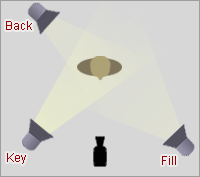
During the hospital scene, we would like the lighting to be as bright and white as possible. We are really keen to show Sophie's distance from reality due to her coma, and the in-between life and death state that she is in.We will use three point lighting to eliminate shadows within this scene.
Pub
Filming inside the pub we are hoping to use quite a lot of orange and yellow lighting to represent the warmth and comfort felt by the characters. We will use the lighting available to us inside, as well as some filters if need be.
Outside the pub and on the street the lighting will be minimal, and we will use low key lighting to create shadows around our characters and create a sense of mystery and danger, representative of the car crash that will follow.
Roadside
When filming on the roadside, lighting will again be dark and lots of shadows created. However, we need to make sure we have some form of key lighting so that the remains of the car and characters injuries can be made out clearly.

 Key Light
The strongest out of all three, the key light has the most influence on the shot. It is placed on one side of the subject, causing one side to be illuminated and the other in darkness or in shadow. High Key Lighting produces soft edges and and no shadows, often associated with realism, while Low Key Lighting produces more shadows and areas of darkness, used to create a tense and mysterious atmosphere. Reflectors can be used to help balance out the light.

Fill Light
This is a secondary light, and is placed on the opposite side to the key light, filling in shadows and helping to make the subject to appear softer. As the role of the key is to only allow us to see a little more detail, it is not as intense as the key light, and similar reflectors can also be used in order to maintain the balance between the two.
Back Light
The back light is placed behind the subject and lights for the rear. Rather than providing direct light, its purpose is to provide definition and subtle highlights around the subjects outline. It also helps separate the subject from the background, resulting in them appearing more 3D.
We tried out different techniques with each of the lights, creating different shadows and areas of darkness. In this picture, we held a spotlight next to the side of Becky's face. this then put one side in full light while the other remained heavily shadowed. This then made her appear more mysterious, a technique that we would really like to use within our thriller in order raise tension.


No comments:
Post a Comment